
2026 was an active year for renewable energy siting, and it unfolded against a backdrop of surging electricity demand, putting more pressure on states to address the barriers to building more energy generation. In the short legislative year, lawmakers across the country still introduced a wave of bills to reshape the rules around where and how large-scale wind, solar, and battery projects are sited and built.
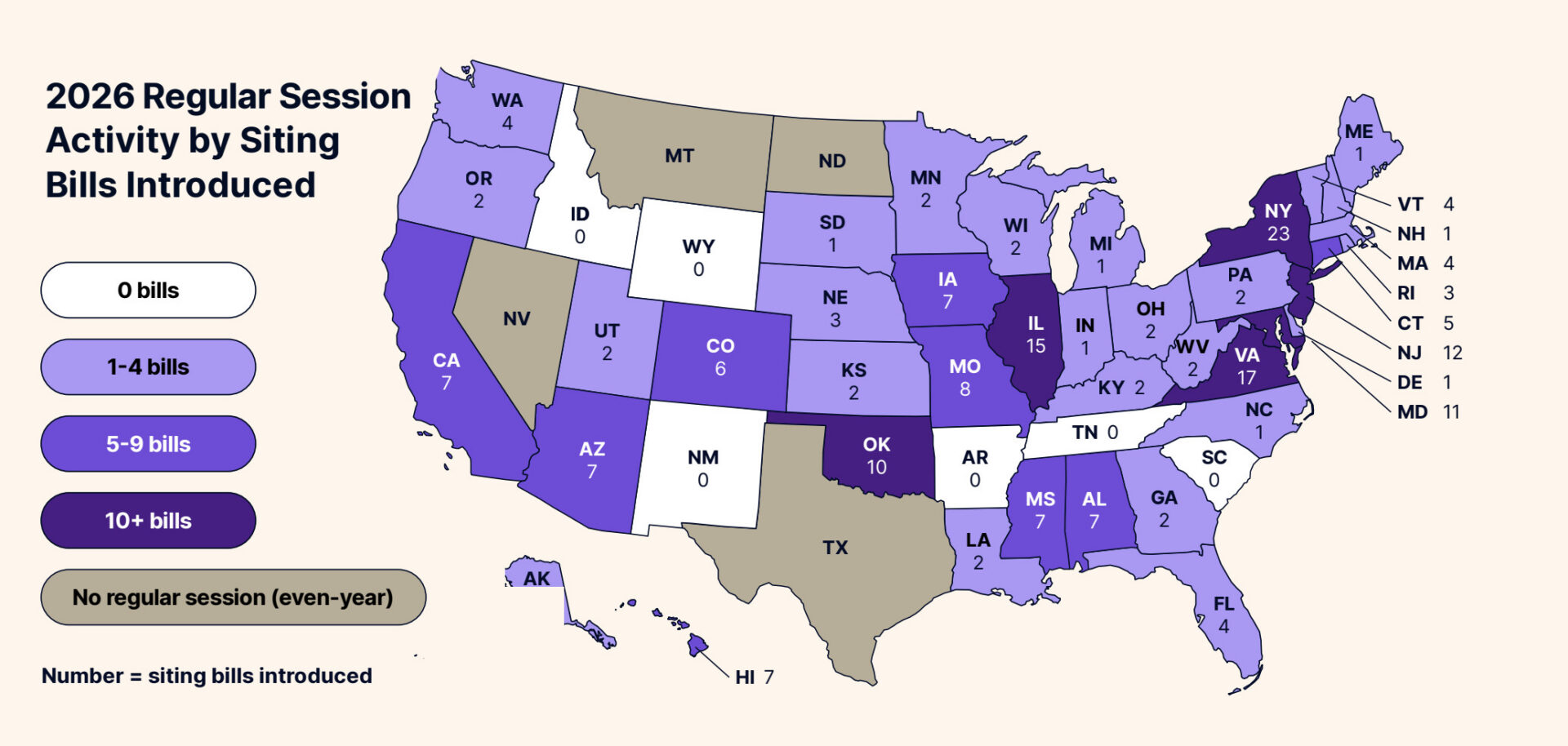
The Siting Solutions Project tracked 201 bills across 40 states...
analyzing policies that regulated setback distances, decommissioning and financialassurance requirements, local zoning authority, moratoriums, and more. Grounded in our expertise on state policy approaches to renewable siting, this report summarizes those efforts and what they mean for clean energy deployment. The picture that emerges is more balanced—and more encouraging—than the surge in restrictive siting bills that defined 2025 legislative agendas.
Like last year, most of the introduced bills attempted to make it harder to build clean energy through aggressive policies like statewide moratoriums, statewide standards as de facto bans, and strengthening local permitting authorities. These attempts largely failed, with most proposals never advancing out of committee and coordinated defensive campaigns successfully defeating those that did. What became law broke decisively for permissive policy in both red and blue states, though most of the legislation involved minor improvements to the status quo rather than comprehensive siting reform.
Key Findings
Major trends shaping clean energy siting and permitting policy across the states.
Most bills introduced across 40 states would have made clean energy projects harder to build, but permissive legislation represented a larger share of introduced bills than it did in 2025.
-
Restrictive bills remained the majority
Most introduced bills would have made clean energy projects harder to build. However, the share of permissive legislation increased relative to 2025.
-
Restrictive proposals were concentrated geographically
Proposed restrictive policies were concentrated in states with state-level siting regimes, southern states with Republican trifectas and high-renewable-deployment states experiencing opposition to continued buildout.
-
Democrats and Republicans took different approaches
Democrats introduced more siting bills and generally proposed minor reforms intended to improve the siting process. Republicans took larger policy swings and more frequently introduced bills that would restrict deployment.
-
Enacted laws favored permissive policy
Enacted legislation broke decisively toward permissive policy in both Republican- and Democrat-controlled states. Efforts by developers and clean energy advocates to prevent restrictive bills from passing were largely successful.
-
Permissive legislation
Virginia, Illinois, Oregon and Washington
These states passed bills making it easier to build new clean energy projects as policymakers sought to address growing energy demand and affordability challenges.
VA IL OR WA -
Restrictive legislation
Utah
Utah enacted the only bill this session expected to make clean energy projects harder to build.
UT -
High activity, limited success
New York, Missouri, Alabama, Oklahoma and Arizona
Policymakers in these states were the most active in attempting to restrict clean energy deployment, but their proposals saw little success.
NY MO AL OK AZ
Looking ahead to 2027
The Siting Solutions Project expects siting to remain a contested issue as data center-driven demand increases the need for more generation and exacerbates rural communities’ large-infrastructure development fatigue. Defensive campaigns in Texas and Iowa are expected as lawmakers continue efforts to restrict deployment, and permissive reforms are expected to be introduced in Pennsylvania, Virginia, and Indiana.
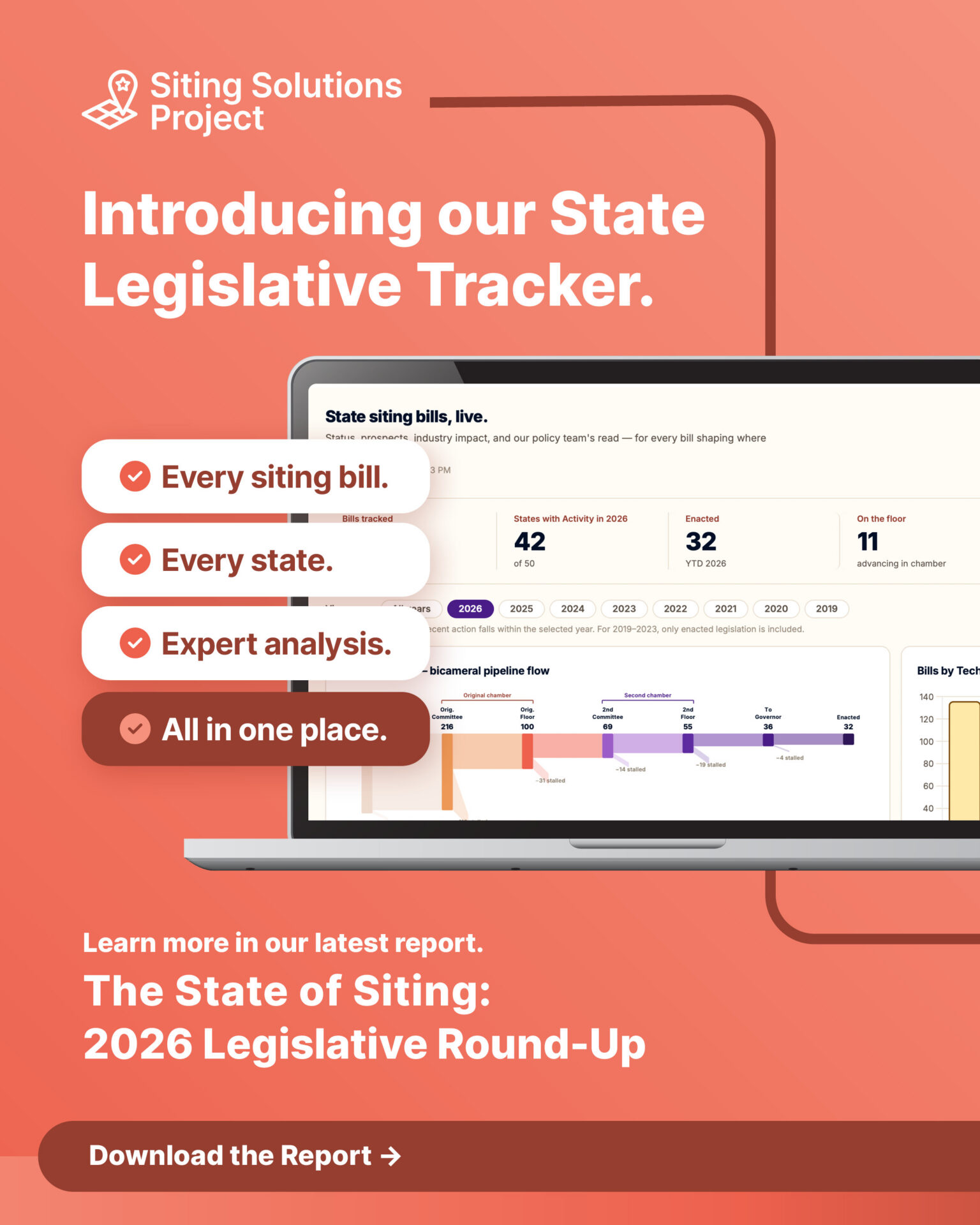
New for 2026: Interactive Legislative Tracker
Dive into every siting bill in every state for yourself in the Siting Solutions Project’s new interactive tracker.
Discover bills’ status, prospects, and industry impact, as well as our policy team’s in-depth analysis on each. This dashboard is updated weekly with new bills and analysis.